To the Moon, to Stay (DTW 2025)
A panel at Dell Tech World with the MIT Media Lab crew whose payloads landed near the lunar south pole in March 2025, and how a megabyte from the Moon becomes a gigabyte of terrain.
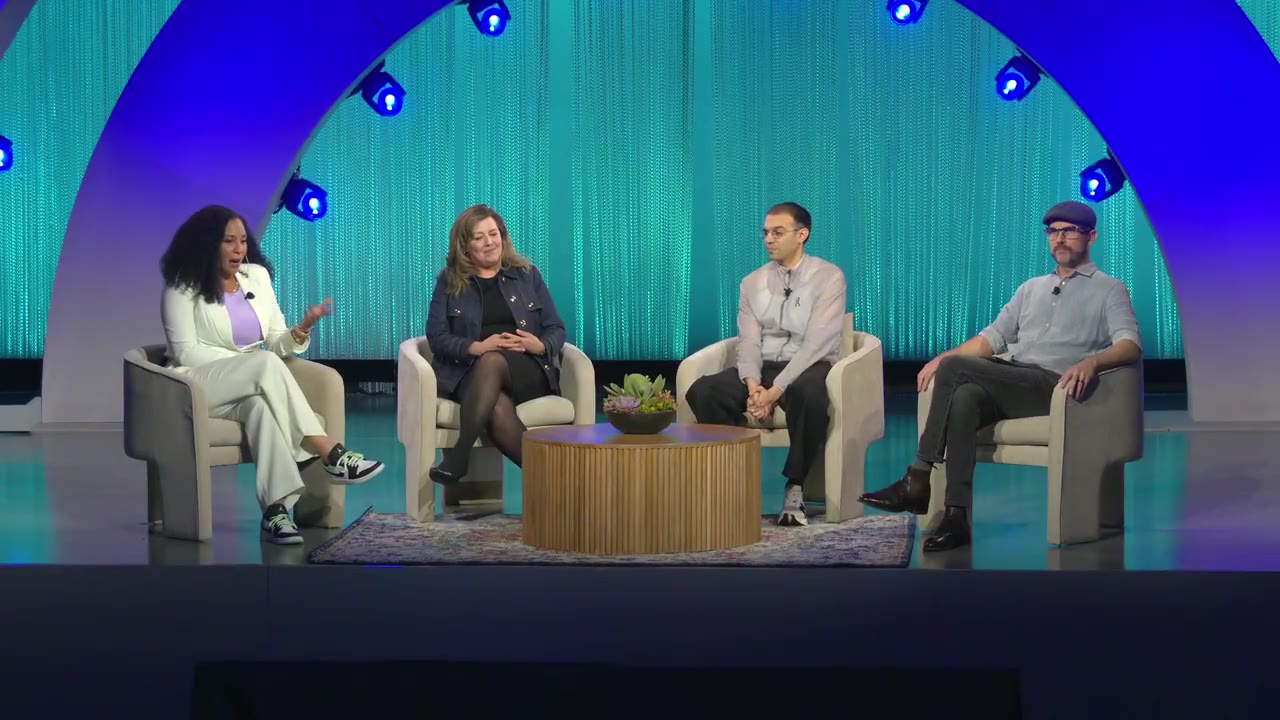
In March 2025 a lander called Athena came to rest in a crater near Mons Mouton, close to the lunar south pole, carrying MIT Media Lab payloads. I was fortunate to lend a small hand in supporting from the Dell side. Two months later I was on a stage at Dell Technologies World talking about it with two of the people who actually put hardware on the Moon, as the warm-up act for Neil deGrasse Tyson. Not a run of sentences I ever expected to type.
The full panel is on the Media Lab’s channel:
https://www.youtube.com/watch?v=4i8ef6QMQ54
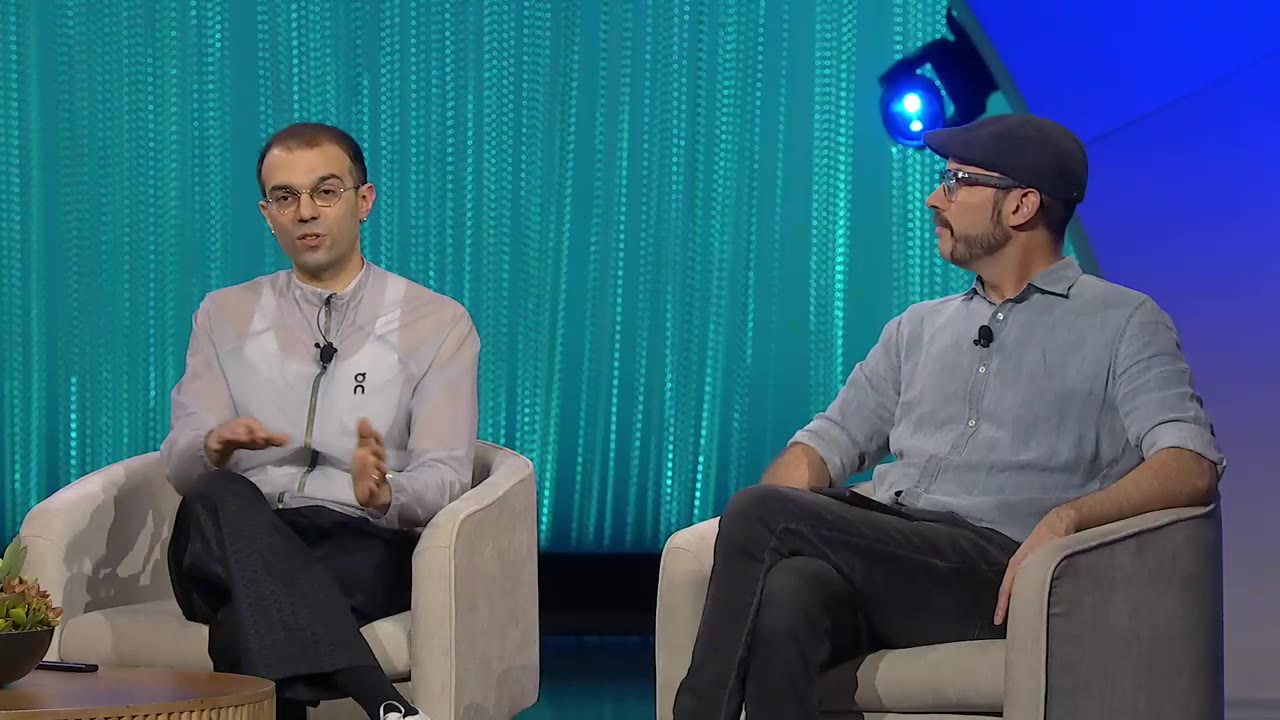
The panel was moderated by Courtney Hughes, with Kim Slater (Chief of Staff at the Media Lab, ex-Draper, fifteen-plus years of NASA missions, shuttle and ISS flight systems) and Dr. Don Haddad (research scientist at NASA Ames and the Media Lab’s Space Exploration Initiative, who leads the lunar imaging and software systems). I was there as the Dell XR lead and the Media Lab liaison, which mostly means I get to stand near much smarter people and bring computers.
The mission
To the Moon to Stay is the Media Lab’s Space Exploration Initiative program, run with NASA, and it rode to the Moon on the Intuitive Machines IM-2 mission. Three MIT payloads went up. The headliner is AstroAnt, a micro-rover that rode on MAPP, Lunar Outpost’s rover and the first US-made commercial rover to touch down on the lunar surface. The original idea was a swarm of the things, Star Wars style, little robots crawling over a bigger spacecraft to inspect it; budget physics being what they are, one unit flew. There’s also a payload I can only describe as a miniature golden record: a nano silicon wafer etched with poetry about the Moon in more than fifty spoken languages. That’s up there now, permanently.
The science payload is a resource camera, a commercially available time-of-flight imager that the team space-hardened with NASA Ames: vibration, thermal, shielding, the works. It does 3D reconstruction of terrain, and because time-of-flight relies on near infrared (850 nanometers on this device, it’s actually a hardened Kinekt and the first LiDAR on the moon!), it can also read information about the regolith composition itself. The target is water ice in the permanently shadowed regions of the south pole, the stuff that never sees sunlight. Water ice is life support, and split into hydrogen and oxygen it’s rocket fuel, which is why everyone wants to land there and why nobody said the south pole was easy.
The mission went off-nominal: instead of two weeks of operations the team got about ten hours after Athena settled into that crater, which is space-engineer for not the plan. But comms got tested, payloads got exercised, and there’s a genuinely beautiful panoramic image from the lander with Earth hanging in the black above the crater rim. As Kim put it on stage, nobody gets into this because it’s easy; the whole point of an off-nominal mission is that the next one’s better.
Dell’s end of it
Dell is a member company of the Media Lab, and membership done properly means working with the researchers, not spectating. So when this came up, the job was to bring the toolbox: elements of the Dell AI Factory, Pro Studio, Precision workstations and AI PCs on the ground, and NVIDIA Omniverse and AI Workbench on top for the digital twin and visualization pipelines.
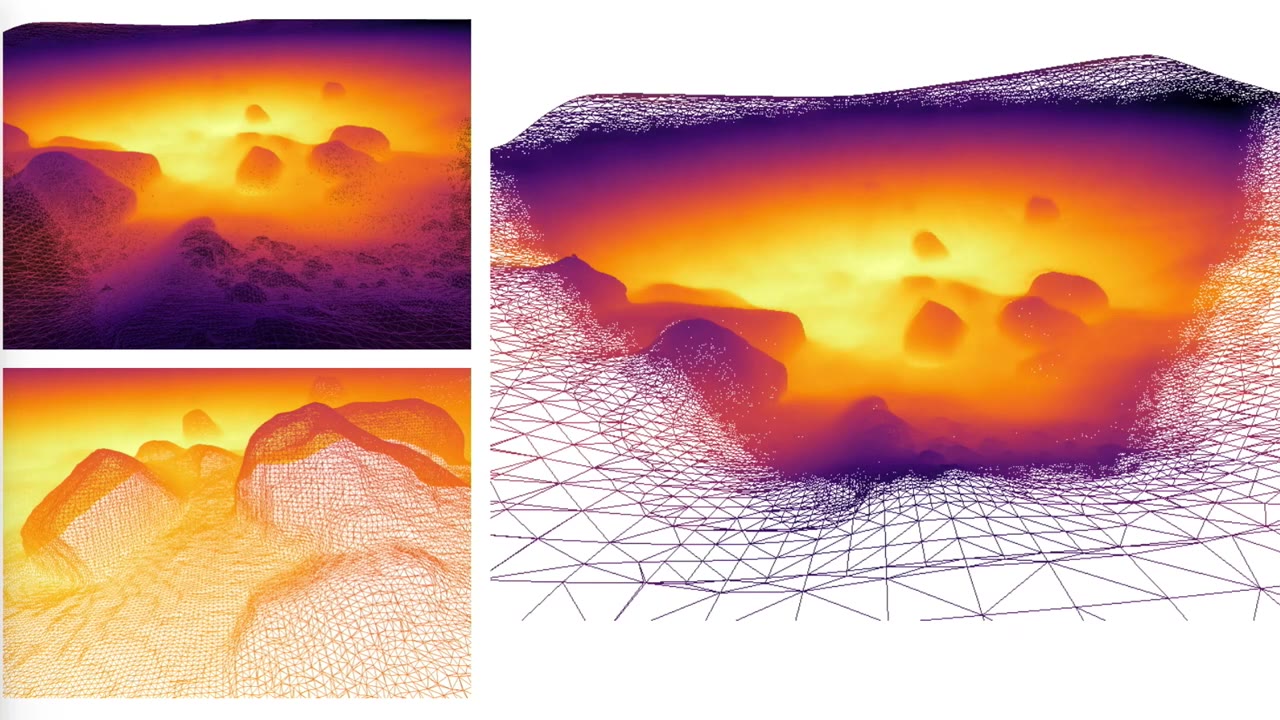
The technical problem I enjoyed most is bandwidth. You do not get to download gigabytes from the Moon; the team’s downlink budget was measured in files under a megabyte. So they built a compression scheme that sends 2D imagery down and does the 3D reconstruction on the ground, where each pixel carries a depth value and gets pushed back into space. The trick Don added: run a super-resolution upres on the imagery first via Esrgan, then do the depth projection. Same downlink, roughly 10x the point cloud density. I extended one of those image sets on a Precision workstation with visual effects tools (Houdini), going from under a megabyte of transmitted data to about a gigabyte of reconstructed terrain. There’s a line to respect here, and Don is careful about it: synthetically enhanced data is fine for training, immersion and mission planning, and not fine for doing science.
The bit of this that still gets me is Luna, the mission control space at MIT, its shell designed by the Department of Architecture, with Dell hardware doing the work inside, with an AI agent wired into the live mission data so visitors could ask it questions as telemetry came in. On the evening of March 6 someone in that room sent a command to the Moon at 10:30pm. On a desktop machine. Don says he still has it at the lab, and fair enough, I’d keep it too.
The panel, and a robot in a salt pit
The panel itself ran on May 19, 2025. Kim’s line of the day was that if Da Vinci had a Dell we’d already be living on the Moon; her more serious one was telling the audience their young daughters will be able to buy a ticket there in their lifetime, and she wasn’t joking. We also ran a live demo on the show floor: an AstroAnt rover designed to investigate swarm dynamics- it’s magnetic wheels allow it to piggyback on the bigger rover that carries the Kinekt camera. A little rover in a sandbox at a trade show, except the sandbox is an analog of the most contested real estate off-planet.
Asked what I’m most excited about, my honest answer was: I want to stand on the Moon in VR, with actual data rather than an artist’s impression. Don wants to tap into a swarm of rovers from Earth that behave like NPCs when nobody’s driving them. Kim’s answer was that she has no idea what’s coming next, and that’s the good part. More missions, more data, more payloads.